


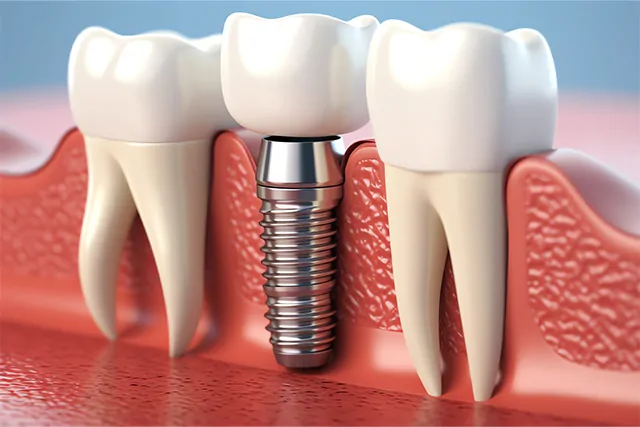
Missing teeth can impact your confidence, speech, and even your enjoyment of favorite foods. Designed to look, feel, and function like natural teeth, dental implants provide long-term benefits that distinguish them from other tooth restoration solutions. Let’s examine why dental implants are a good option for tooth replacement.
Exploring Implant Benefits
Dental implants offer numerous advantages that distinguish them from other tooth replacement options. These benefits extend beyond aesthetics to encompass oral health, function, and overall well-being.
- Durability and Longevity: Dental implants provide durability compared to other tooth replacement methods. The titanium implant integrates with your jawbone through a process called osseointegration, creating a permanent bond. This fusion allows dental implants to withstand regular chewing forces for a long time. With proper care, implants can last a lifetime, making them a cost-effective long-term investment.
- Natural Look and Feel: Dental restoration implants closely mimic the appearance and function of natural teeth. The custom-made crown attached to the implant matches the color, shape, and size of your surrounding teeth. This seamless integration creates a natural-looking smile that boosts confidence.
- Jawbone Health: Tooth implants stimulate the jawbone, preventing bone loss that occurs after tooth extraction. When you lose a tooth, the underlying bone begins to deteriorate due to a lack of stimulation. This bone loss can alter your facial structure, creating a sunken appearance.
- Improved Oral Health and Confidence: Permanent tooth replacement with implants supports better oral hygiene compared to other options. Unlike bridges, implants don’t require modification of adjacent healthy teeth. You can brush and floss around implants just as you would with natural teeth, maintaining optimal oral health.
The stability and natural appearance of implants restore confidence in social and professional situations. You can speak, laugh, and smile without worrying about denture movement or appearance. This psychological benefit significantly improves quality of life and self-esteem.
Evaluating Implant Candidacy
Successful dental implant placement requires specific oral health conditions and sufficient bone structure. Understanding these requirements helps determine if you’re a suitable candidate for this tooth restoration method. Ideal candidates have healthy gums free from periodontal disease. Active gum disease can compromise implant integration and long-term success.
Adequate bone density in the jaw is fundamental for implant stability. The jawbone must have sufficient height, width, and density to support the titanium post. Advanced imaging techniques allow precise evaluation of bone structure and implant placement planning. Patients with insufficient bone may benefit from bone grafting procedures. This surgical treatment adds donor bone to areas with bone recession, creating adequate support for implant placement. Bone grafting extends implant candidacy to patients who might otherwise be unsuitable for this treatment.
Good overall health and commitment to oral hygiene are also key factors. Certain medical conditions and medications can affect healing and implant integration. During the consultation process, your dentist will review your medical history and current medications.
Book Your Dental Implants Consultation Today
Dental implants are the gold standard for tooth replacement due to their durability, natural appearance, and bone-preserving properties. These solutions offer function and aesthetics benefits compared to traditional dentures or bridges. Schedule your dental restoration implants consultation today to evaluate your candidacy for this transformative treatment.



Leave a Reply